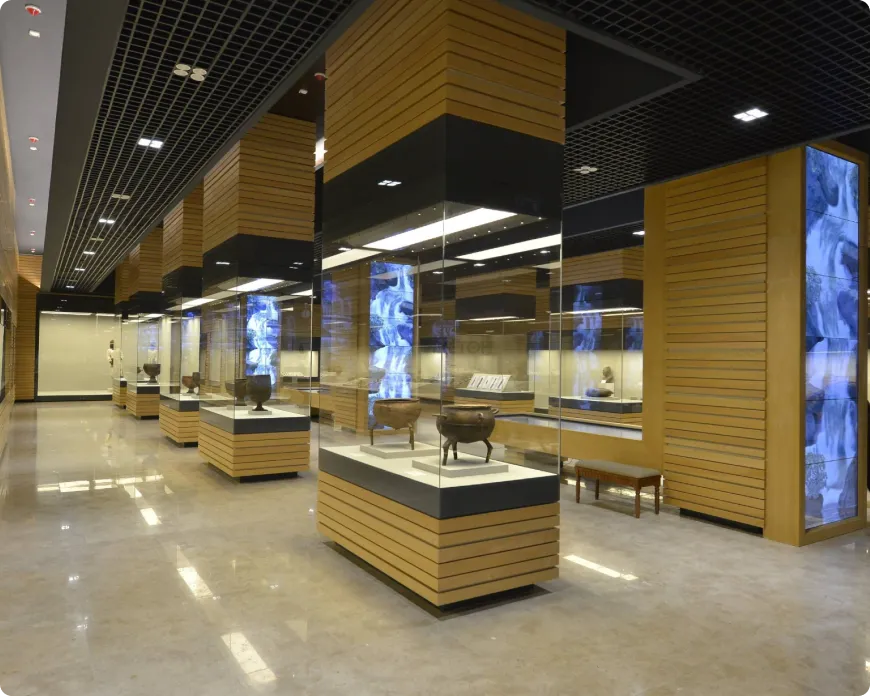
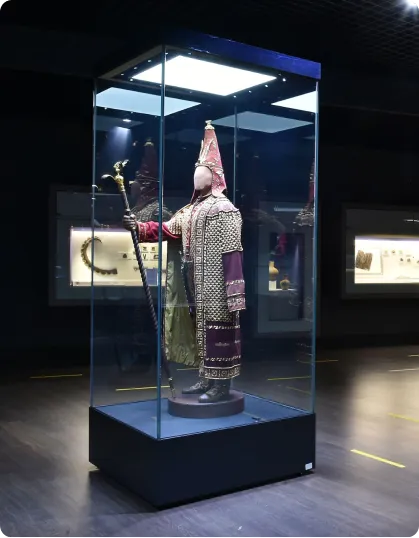
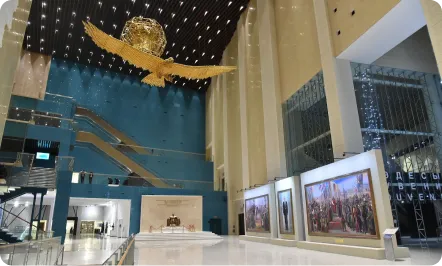
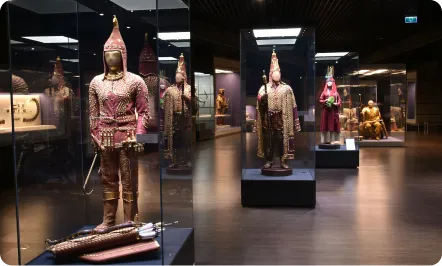
The National Museum of the Republic of Kazakhstan is the country's largest museum and one of the most modern cultural centers in Central Asia. Located in Astana, on Independence Square, it is an important part of the capital's architectural ensemble. The museum was established as part of the state program "Cultural Heritage." The decree establishing it was adopted on July 2, 2013, and it opened to the public in 2014. The museum building is a modern architectural complex constructed of glass and white marble. Its total area is approximately 74,000 square meters, making it one of the largest museum complexes in the region. The museum's exhibition covers the entire history of Kazakhstan, from ancient times to the present day. The halls display archaeological finds, household items, national costumes, works of art, and unique historical artifacts. Among the main halls of the museum: ● Hall of Ancient and Medieval History ● Hall of the History of Kazakhstan ● Hall of Gold (with unique finds, including the “Golden Man”) ● Hall of Ethnography ● Hall of Independent Kazakhstan ● Hall of Contemporary Art ● Hall of Astana
Visitors are particularly drawn to the "Golden Man"—one of the main symbols of Kazakhstan—as well as the rich collections reflecting the culture of nomadic peoples. The National Museum serves not only as an exhibition space but also as a research and educational institution. It hosts tours, interactive activities, temporary exhibitions, and cultural events for all ages. Today, the museum is an important center for the preservation and promotion of Kazakhstan's historical and cultural heritage and one of Astana's main attractions.