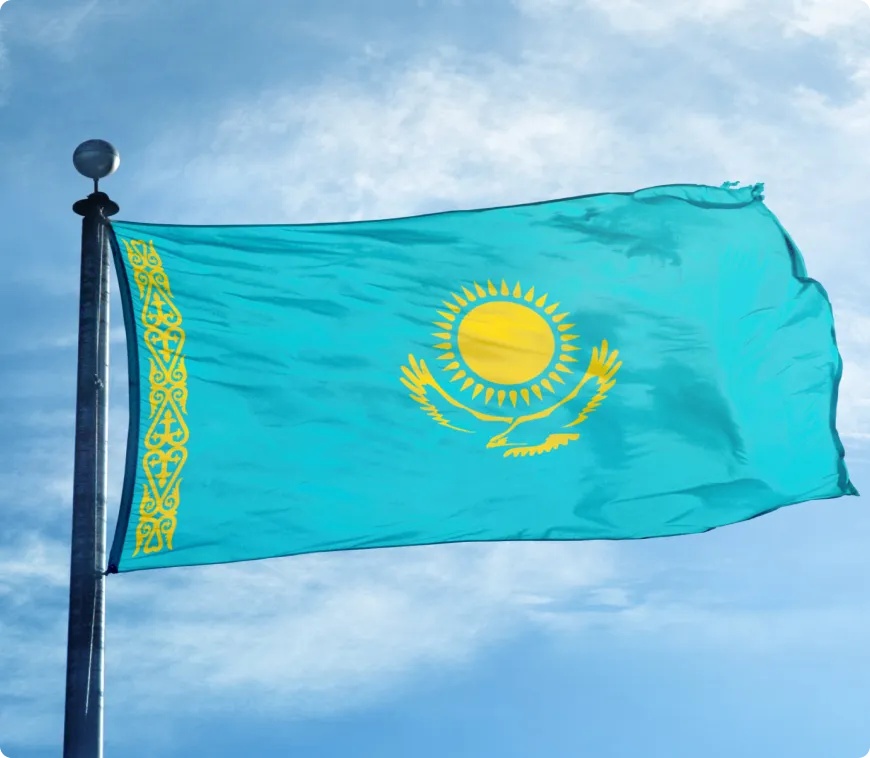
About Kazakhstan
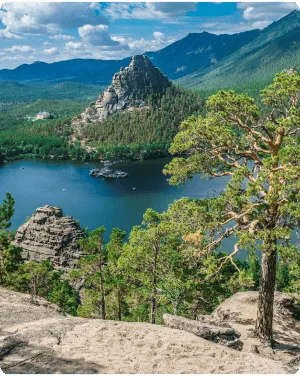
Kazakhstan is the world’s largest country without direct access to the World Ocean. Much of its territory consists of deserts (44%) and semi-deserts (14%). Steppes cover 26% of the country, while forests account for 5.5%. Kazakhstan has approximately 8,500 rivers. The north-eastern part of the Caspian Sea lies within Kazakhstan, and the Aral Sea is shared between Kazakhstan and Uzbekistan. The country is home to around 48,000 large and small lakes, the largest of which are Balkhash, Zaysan, and Alakol. Its distance from the oceans contributes to a sharply continental climate. Kazakhstan’s administrative and territorial structure includes
The population of Kazakhstan exceeds

The weather of Kazakhstan
Most of the republic has a sharply continental climate, with large temperature fluctuations throughout the year. Four distinct seasons are observed: cold and snowy winters, short and changeable springs, hot and dry summers, and dry autumns. Winters are long, usually snowy and frosty, with temperatures reaching -45°C. Summers are hot and dry, with temperatures reaching +40°C. In the southern foothill regions, the climate is moderate continental, with milder winters and less hot summers than in the steppes. The most comfortable climate is on the Caspian Sea coast: summers are not unbearably hot, and winters are mild. South of the line between Aktau (43°39′ north latitude) and Shymkent (42°18′ north latitude), Kazakhstan has a subtropical inland climate, characterized by warm winters and hot summers.
 -45in the winter
 +40in the summer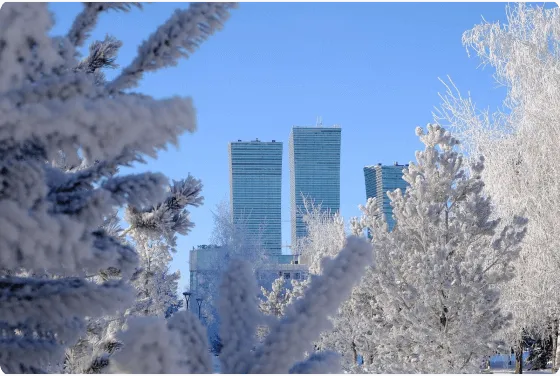
Strategic vision and documents
Kazakhstan has adopted the following Strategic Documents:
- 1Strategy for achieving Carbon Neutrality until 2060
- 2NDC to reduce greenhouse gas emissions by 17% from 1990 levels by 2035
- 3Concepts for the transition of the Republic of Kazakhstan to a «green economy»
- 4The concept of managing all types of waste for 2026-2030

Taza Kazakhstan

This is a large-scale national environmental campaign under the auspices of the Presidentof the Republic of Kazakhstan K. Tokayev, aimed at creating an ecological culture through cleaning territories (settlements, natural objects, banks of reservoirs), planting trees (millions of seedlings) and combating unauthorized landfills, involving young people, business and government agencies, with a focus on waste management, innovation and landscaping.
The 2 Billion Trees project
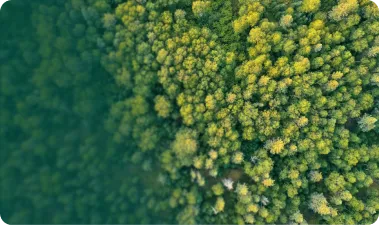
This is an initiative in Kazakhstan, with the aim of creating woodlands until 2025, and then extended until 2027. The goal is to plant and sow $ 2 billion. saplings of tree and shrub species, including saxaul, pine, birch and others, in the state forest fund to restore forests and improve the ecological situation.
The International Fund for Biodiversity Conservation
This is an initiative of Kazakhstan that will unite the efforts of states, international organizations (UNDP, UNESCO, FAO) and NGOs to finance the protection of ecosystems, develop ecotourism, introduce eco-technologies and raise awareness, working according to the best international standards for sustainable development and conservation of flora and fauna.
UN Regional Center for Sustainable Development Goals (SDGs) for Central Asia and Afghanistan
The UN Regional Center for Sustainable Development Goals (SDGs) for Central Asia and Afghanistan has been established in Kazakhstan (Almaty). It was approved by the UN member states in March 2025, opened in August 2025, and its goal is to contribute to the achievement of 17 global SDGs by 2030.